


Helen Leahy was her party’s chief of staff from 1999 to 2015.
After the 2008, 2011 and 2014 elections, the Māori Party signed confidence-and-supply agreements with John Key’s National-led Governments. Co-leaders Pita Sharples and Tariana Turia became ministers outside Cabinet.
The process of coalition negotiations is largely conducted behind closed doors, but Leahy remembers just what was at stake.
She says smaller parties need to consider what they can deliver for their voters.
“Choose what will deliver the most on the aspirations of the people that voted you into power. And if there’s too much compromise that’s going to be required, then perhaps sit on the opposition benches.”
Looking back, Leahy says the Māori Party’s negotiations were guided by the advice of Dr Whatarangi Winiata, the party’s inaugural president.
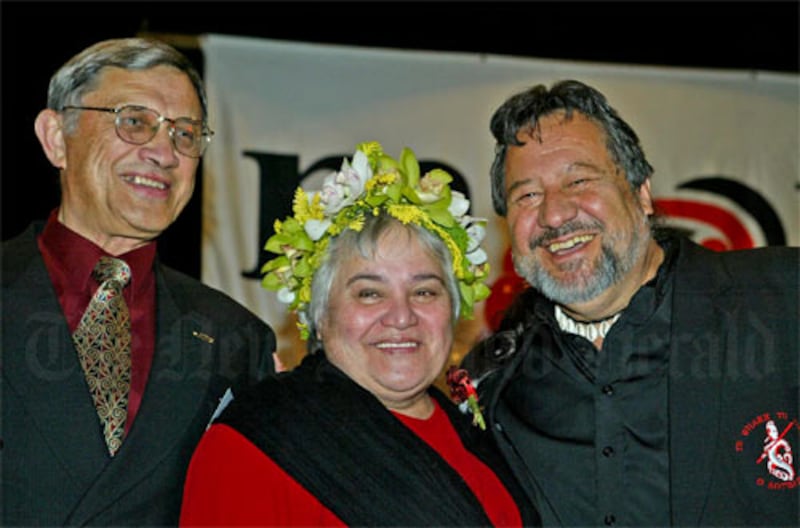
“He always said to us, go into coalition agreement talks with a view that it’s not about working with them. It’s about what they can do to support our aspirations,” she said.
NZ First deputy leader Shane Jones is also no stranger to negotiations.
He says coalition talks are ‘tapu’ but, for whānau wanting to understand what happens behind closed doors, they are ultimately based on trust.
“You’re in a room and what takes place in that room has a great deal of confidentiality and for a long time it sits there as tapu. And many of the exchanges in the room never ever come to the light of day because people need to be confident when they’re testing out options.”

He adds that sometimes it’s a matter of pulling back and asking an important question.
“When you’re doing political negotiations, you’ve always got to ask yourself, do I have a better alternative than agreeing to the proposal on the table? You can bluster, you can pull various strokes, but at the end of the day, do I have a better alternative to a negotiated agreement?”
Jones says there is always a risk of pettiness when dealing with people.
“People who have a very narrow and petty approach, they never make the grade. They’re very quickly weeded out, and if you have too many of them in your political party, the most important thing is to jettison them as soon as possible,” he said.
Party leaders have been meeting each other behind the scenes before the final make-up of parliament is sorted.
National, ACT and NZ First currently hold a one-seat majority, but that could change once the special votes are counted.
The final election results will be announced by the Electoral Commission next Friday and could change the numbers needed to form the next government.